- AI PlanetX
- Posts
- Alibaba Drops Sora Rival Wan 2.6

In partnership with


Welcome to another edition of AI PlanetX.
Alibaba unveils a Sora rival; Nvidia’s Nemotron 3 beats GPT-OSS and Qwen3 as AI models pass all CFA levels, with Gemini 3.0 Pro setting record.
Inside This Edition: 💎
Hottest AI News
Top AI & SaaS Tools
AI Tutorial: Slide Decks That Update Themselves
Top AI & Tech News
AI Art Spotlight
Prompt of the Day: Prompt for Trend Analysis Playbook
AI Video Tutorial
Course of the Day: Agent Tools & Interoperability with MCP by Google
Hottest AI News
Alibaba
Alibaba Just Dropped A Powerful Sora Rival With Native Audio

Alibaba just pulled a massive surprise by dropping their “Sora Rival,” Wan 2.6, early. It quietly hit partner platforms like Fal and Replicate ahead of tomorrow’s official launch, catching developers and the AI community off guard.
Details:
It delivers stunning 1080p resolution at 24fps for clips up to 15 seconds across text, image, and video-to-video modes, featuring groundbreaking native audio generation that perfectly lip-syncs and matches sounds
The model enables complex storytelling through multi-shot narratives and character casting, allowing users to place reference figures into scenes while maintaining strict consistency in appearance, voice, and interaction
Beyond video, it offers cinematic image generation with precise control over lighting and style, supports text rendering for graphics, and uses multi-image referencing to create interleaved text-and-image narratives based on real-world reasoning
With the model still locked behind commercial APIs, the community is waiting for the December 17 event to see whether Alibaba will release the weights.
Want to get the most out of ChatGPT?

ChatGPT is a superpower if you know how to use it correctly.
Discover how HubSpot's guide to AI can elevate both your productivity and creativity to get more things done.
Learn to automate tasks, enhance decision-making, and foster innovation with the power of AI.
Nvidia
Nvidia Launches Nemotron 3 That Beats GPT-OSS And Qwen3

Nvidia is aggressively expanding its open-source ecosystem, combining a major infrastructure acquisition with the release of powerful advanced AI models to dominate the agentic and physical AI landscape.
Details:
Nemotron 3 family delivers efficient open models for agent building, including a Nano version that runs locally on 24GB RAM with a 1M-token context window, 31.6B parameters, and up to 3.3x higher throughput than rivals
To strengthen its infrastructure backbone, the company acquired SchedMD to operate the popular Slurm workload manager, committing to keep the critical HPC software open source and vendor-neutral for AI
This move complements recent releases like the Alpamayo-R1 reasoning model and Cosmos world models, signaling a broader strategy to turn advanced AI into a transparent, full-stack platform
With CEO Jensen Huang calling open innovation the foundation of AI progress, Nvidia is giving developers full weights, recipes, and tools to build the next gen of scalable AI.
Top AI & SaaS Tools
SheetXAI (Life-time Deal): AI-powered add-on that automates spreadsheet tasks in Google Sheets and Excel using plain‑English commands
Manus 1.6: Major release introducing 3 features including Manus 1.6 Max, end‑to‑end mobile app generation, and an interactive image design canvas [F-R-E-E]
Zoom AI Companion 3.0: A fresh web interface, automated personal workflows for follow‑ups, smart retrieval across meetings and apps, and an agentic writing mode
Mocha: Builds full web apps from your description—database, auth, payments, and deployment included, with full project memory across sessions
Olmo 3.1: AI models from AI2 trained longer and scaled to 32B, giving a stronger reasoning model, a better chat model, and improved 7B math/code models [F-R-E-E]
The Future of Shopping? AI + Actual Humans.

AI has changed how consumers shop, but people still drive decisions. Levanta’s research shows affiliate and creator content continues to influence conversions, plus it now shapes the product recommendations AI delivers. Affiliate marketing isn’t being replaced by AI, it’s being amplified.
AI Tutorial
How to Create Professional Slide Decks That Update Themselves
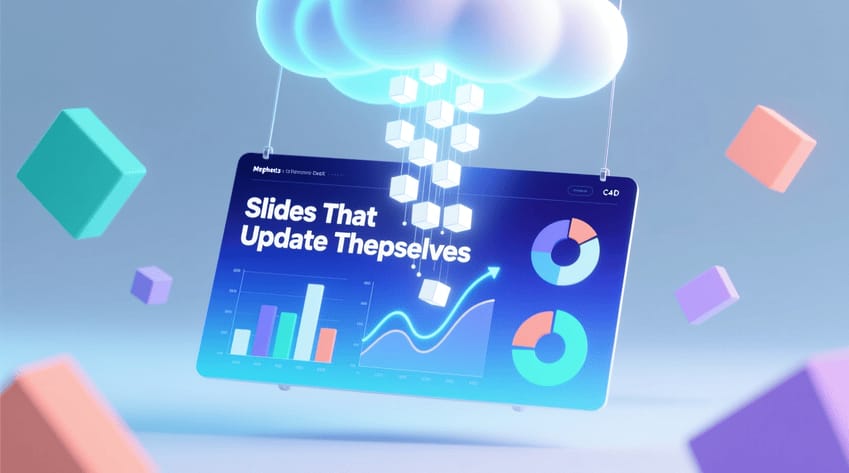
Most presentations go out of date the moment you finish them. In this tutorial, you’ll learn how to use Manus to create slide decks that don’t just look professional, but also update themselves as fresh data appears.
Define goal
Decide what the deck is for before starting. A clear goal helps Manus stay focused and avoid unnecessary slides.
Think about the audience, the main takeaway, and the level of detail needed.
Write clear prompt
Launch the Manus dashboard and enter a specific, well-scoped prompt that explains what you want.
Example prompt:
“Create a 12-slide presentation on emerging AI use cases for ecommerce brands, including market data, practical examples, and one slide on short-term adoption risks.”Add structure and limits
Guide Manus by setting clear boundaries so the output matches your expectations.
You can specify:
Number of slides
Required sections
Overall tone or style
Select Slides as output
Choose Slides as the output format, pick a suitable theme, and confirm to start the workflow.
Let Manus handle work in cloud
Manus runs the entire process on its own. It will:
Research current information
Summarize key insights
Create charts and visuals
You don’t need to stay involved during this stage.
Review generated deck
Once complete, quickly review the slides to polish the result. You may want to:
Reorder slides
Edit headlines
Remove anything unnecessary
This is light refinement, not heavy editing.
Export for final edits
Export the deck to Google Slides or another editor to apply branding, collaborate, or make small design tweaks.
Enable automatic updates
If the topic changes over time, turn on automatic updates so Manus refreshes data and insights without rebuilding the deck.
Note: After exporting to Google Slides, lock finalized design elements so updates affect content, not layout.
Top AI & Tech News
Recent study shows six leading AI models pass all three CFA exam levels, with Gemini 3.0 Pro setting a Level I record at 97.6%
Merriam-Webster’s 2025 Word of the Year is “slop,” meaning low‑quality digital content mass‑produced by AI
Anthropic is testing a redesigned interface for Claude that adds an Agent mode and specialized modes for research, analysis, writing, and building
Disney’s latest deal with OpenAI gives OpenAI’s Sora exclusive rights to use more than 200 Disney characters for 1 year
AI Art Spotlight

Create Your Own Photo Like This Using the Prompt Below:
Use the uploaded/reference image as the subject. A monochromatic digital human kneeling in a dark space, wrapped in glowing white cables connected to head, limbs, and chest. Wearing a futuristic tracksuit with neon stripes. Holding a smartphone, staring intensely. Editorial lighting, cyberpunk mood, themes of digital dependence and identity. Stark contrast, surreal atmosphere.Model: Nano Banana Pro
Prompt of the Day
Prompt for Trend Analysis Playbook
This prompt turns AI into an expert trend analyst with a compact framework to collect key inputs, identify and rate emerging trends, explain drivers and weak signals, compare historical patterns, create forward scenarios, and deliver prioritized recommendations plus a clear, actionable output format for confident decision making.
Top AI Video Tutorial
AI CEO: This Is How I’d Make My First Million With AI in 2026
AI Course of the Day
Agent Tools & Interoperability with MCP

This course explains how modern AI agents go beyond chat to perform real-world tasks using tools, APIs, and the Model Context Protocol (MCP). You will learn how agent tools work, why interoperability matters, and how MCP standardizes communication between models and external systems, with practical examples for building reliable, secure, and scalable tool-enabled agents.