- AI PlanetX
- Posts
- AMD Says Claude Code Got Worse

In partnership with


Welcome to another edition of AI PlanetX.
AMD questions Claude Code limits; OpenAI backs AI wealth fund over UBI; Zoom CEO Eric Yuan predicts AI agents could shrink workweeks to three days by 2031.
Inside This Edition: 💎
Hottest AI News
Top AI & SaaS Tools
AI Tutorial: Spot Scams With ChatGPT
Top AI & Tech News
AI Art Spotlight
Prompt of the Day: AI Content Monetization
Featured AI Video
Course of the Day: AI (Almost) Anything by MIT
Hottest AI News
AMD
AMD Says Claude Code Can No Longer Handle Hard Engineering
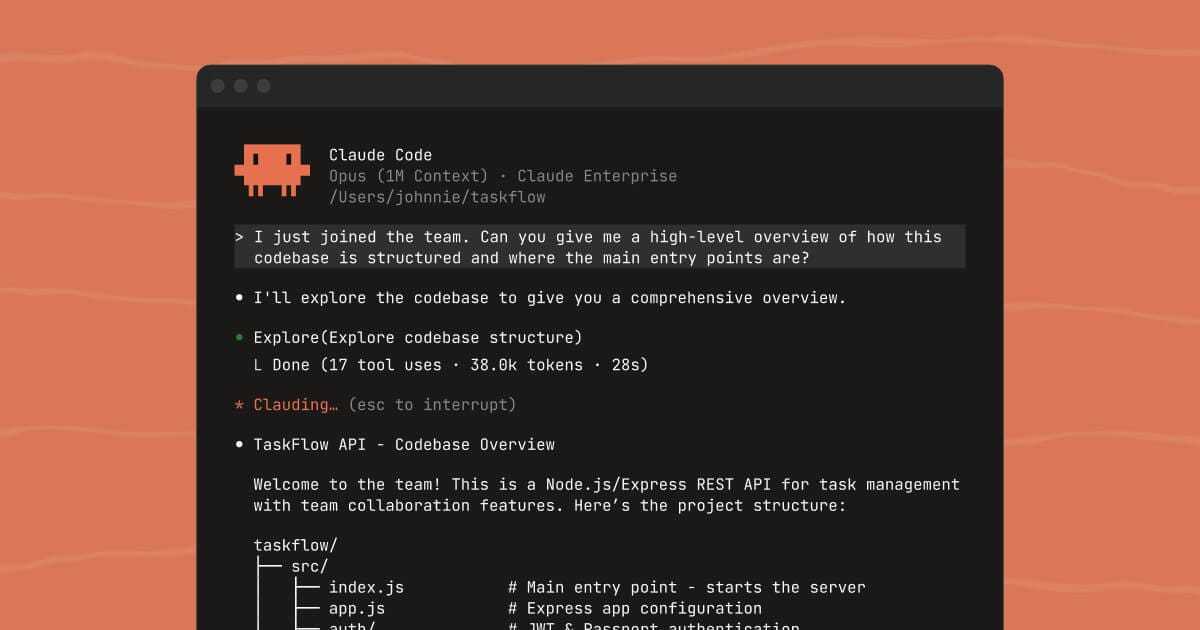
Claude Code is facing a serious credibility problem after AMD’s senior AI director said it has regressed, become unreliable for complex engineering, and pushed their team to switch providers after repeated failures.
Details:
AMD’s Stella Laurenzo filed a GitHub issue after reviewing nearly 7,000 Claude Code sessions, saying the tool reads far less code before editing and struggles to finish hard tasks
It says Claude Code rewrites whole files about twice as often, abandons jobs mid-way far more than before, and had its visible reasoning cut from full display to zero in March 2026
Laurenzo tied the drop to hidden reasoning, urged Anthropic to restore thinking visibility or offer a premium deep-reasoning tier, and said AMD’s engineering team has already moved to a rival
After 14 rapid releases and 5 outages in one month, critics say Anthropic’s quality control may be slipping, and the Mythos delay debate got louder.
Learn how to code faster with AI in 5 mins a day

You're spending 40 hours a week writing code that AI could do in 10.
While you're grinding through pull requests, 200k+ engineers at OpenAI, Google & Meta are using AI to ship faster.
How?
The Code newsletter teaches them exactly which AI tools to use and how to use them.
Here's what you get:
AI coding techniques used by top engineers at top companies in just 5 mins a day
Tools and workflows that cut your coding time in half
Tech insights that keep you 6 months ahead
Sign up and get access to the Ultimate Claude code guide to ship 5X faster.
OpenAI
OpenAI Pushes AI Wealth Fund Over Universal Basic Income
OpenAI is pitching a future where superintelligence may disrupt jobs, but instead of leading with UBI, it wants citizens tied to an AI-linked public wealth fund that rises or falls with the market.
Details:
In its policy paper, OpenAI says the shift toward superintelligence could disrupt jobs, concentrate wealth, and outgrow existing safety nets, so it argues for a broader rewrite of economic policy
Its main idea is a public wealth fund seeded with help from policymakers and AI firms, investing in AI and related companies, with returns paid directly to citizens as shared economic upside
The paper pairs that with tax changes, stronger worker input, wider AI use, sturdier unemployment and welfare systems, plus shorter-workweek pilots when AI lifts output and reduces routine work
OpenAI is trying to frame the post-work debate around public investment and shared returns, not guaranteed cash. That is likely to trigger strong debate.
Top AI & SaaS Tools
Shareables (Life-time Deal): Turns Google Sheets, Airtable, or Notion into customizable, live-synced, no-code websites with templates, search/filters, and lightweight embeds
Interactive Simulations Gemini: Gemini creates interactive 3D simulations inside chat, turning complex topics into manipulable visualizations
EditWithAva: First AI video editor that understands your footage to auto-cut, select scenes, and deliver publish-ready edits [F-R-E-E Trial]
Qwen-Image-2.0: Image model that generates native 2K photoreal images and pro-quality slides with flawless text rendering [F-R-E-E]
Manus Agents: Brings the full Manus AI agent into messaging apps (starting with Telegram) with multi-step reasoning, tools, and file/voice handling
AI agents now read your docs almost as much as humans do.

Mintlify analyzed 790 million requests across its documentation platform. The finding: AI coding agents account for 45.3% of all traffic, nearly tied with traditional browsers at 45.8%.
Two tools are driving almost all of it:
Claude Code: 25.2% of total traffic, more requests than Chrome on Windows
Cursor: 18% of total traffic
Together they account for 95.6% of all identified AI agent traffic
The rest of the field, OpenCode, Trae, ChatGPT, and NotebookLM, is showing up but nowhere close.
One caveat: OpenAI's Codex doesn't send an identifiable user-agent header, so the real agent percentage is likely even higher.
The takeaway for anyone maintaining developer docs: your documentation now serves two audiences. Structure and machine-readability matter as much as clarity for human readers.
AI Tutorial
How to Spot Scams in Seconds With Malwarebytes in ChatGPT

Scams are more advanced and harder to spot than ever. With Malwarebytes inside ChatGPT, you can quickly review links, emails, numbers, messages, and screenshots before you interact with them.
Turn on Malwarebytes
Launch ChatGPT and go to Settings → Apps. Search for Malwarebytes, then enable the integration. You need to do this once.
Start fresh chat
Enter a fresh chat so the request is clean and easy to follow.
Add items to verify
Paste or upload the suspicious content you want checked:
A link or domain
An email address, sender details, or the full email text
A message or SMS that includes an unknown number
Ask Malwarebytes to run check
Type a clear command that tells the tool what to do.
Example prompts:
“Malwarebytes, scan this link and tell me if it’s risky: [paste]”“Malwarebytes, verify this sender and message for scam signs: [paste]”Make sure app activates
You should see the integration activate in the prompt bar. If it doesn’t, press the + icon and select Malwarebytes from the drop-down menu.
Read results like checklist
Malwarebytes will scan the details and return info such as:
Who the sender appears to be
Threat intelligence signals tied to the content
It may also flag common scam tactics like urgency, fake links, impersonation, or credential harvesting.
Note: If a message asks for passwords, OTP codes, or payment info, assume it’s a scam and verify through an official channel.
Top AI & Tech News
Zoom CEO Eric Yuan says AI-driven “digital agents” will make the five-day workweek obsolete, predicting a three-day workweek by around 2031
Queensland’s Crisafulli Government will criminalize the creation of non‑consensual digitally generated or altered intimate images, including AI deepfakes
China is deploying embodied AI robots for dangerous industrial work, including a magnetic wall‑climbing humanoid robot in Tangshan
AI Art Spotlight

Create Your Own Photo Like This Using the Prompt Below:
Ultra-wide-angle hyper-realistic top-down flat lay photography. The central focus is a custom physical conference table meticulously shaped like [SHAPE/NUMBER/SYMBOL].
The table features [MATERIAL/TEXTURE/COLOR] and placed on a [FLOOR COLOR] floor, creating significant negative space around it for a clean, minimalist composition. A group of [NUMBER] real people are sitting around the edges of this [SHAPE]-shaped table. [POSITIONING: e.g., 3 on each side, 1 top/bottom]
Actions: [DESCRIBE PEOPLE'S ACTIONS, e.g., working on laptops, drinking coffee].
Lighting & Quality: Professional studio lighting with crisp, distinct drop shadows that define the [SHAPE] silhouette on the floor. 8k resolution, sharp focus, cinematic commercial aesthetic.
Model: Nano Banana 2
Prompt of the Day
AI Content Monetization Prompt

A beginner‑friendly guide to building semi‑passive AI income with no coding required. It covers three realistic income paths matched to your strengths, with clear action plans for positioning, quick launches, monetization, and automation—all within a modest budget and part‑time hours.
Featured AI Video
Claude Cowork + NotebookLM Is Overpowered
AI Course of the Day
How to AI (Almost) Anything by MIT

A practical, project-focused introduction to modern AI that emphasizes deep learning and foundation models across multiple data types. Students learn core concepts—representation learning, training and evaluation, prompt engineering, fine-tuning, and tool and use-case design—and apply them to real-world modalities beyond text.