- AI PlanetX
- Posts
- The End of Programming Jobs?

In partnership with


Welcome to another edition of AI PlanetX.
Anthropic CEO says AI will write most code within a year; ex-OpenAI and Google team launches $4.48B startup Humans&; Liquid AI debuts smartphone-scale reasoning model.
Inside This Edition: 💎
Hottest AI News
Top AI & SaaS Tools
AI Tutorial: Replace Any Voice in AI Videos
Top AI & Tech News
AI Art Spotlight
Prompt of the Day: Agentic Design Patterns by Google
Featured AI Video
Course of the Day: Facebook Ads Mastery Course
Hottest AI News
AI Future
AI Will Handle Most Coding Within 12 Months Warns Anthropic CEO
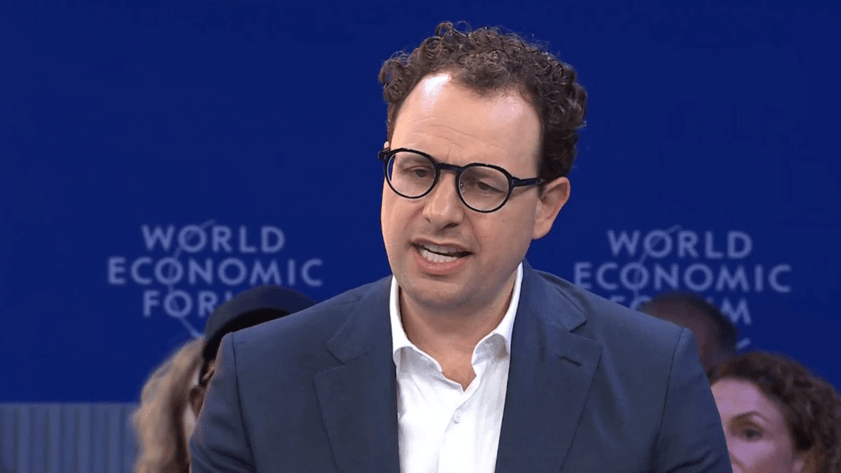
Anthropic CEO Dario Amodei just delivered a stark warning at Davos: we may be just 6 to 12 months away from AI models handling most, if not all, software engineering tasks end-to-end.
Details:
Amodei said Anthropic engineers "edit" code instead of writing it, comparing selling US chips to China to "selling nuclear weapons to North Korea." His company is scaling to 1M self-deployed TPUs and a projected $70B ARR
He predicts a "zeroth-world" economy: 5–10% GDP growth with 10% unemployment, where a small group of tech workers thrive while most stagnate
DeepMind’s Hassabis sees a slightly slower pace, but both highlight AI building AI as the key metric. They advise juniors to master these tools to "leapfrog" seniors before the barrier rises
If Amodei is right, we have less than two years to adapt to human-level cognition across most tasks; the time to exploit the current "capability overhang" is short.
Want to get the most out of ChatGPT?
ChatGPT is a superpower if you know how to use it correctly.
Discover how HubSpot's guide to AI can elevate both your productivity and creativity to get more things done.
Learn to automate tasks, enhance decision-making, and foster innovation with the power of AI.
Humans
Former Staff from OpenAI, Anthropic, and Google Build $4.48B Startup, Humans&
Humans&, a 3-month-old startup by Anthropic, xAI, Google, and Stanford alumni, raised $480M at a $4.48B valuation. Backed by Nvidia, Bezos, and Emerson Collective, it builds “human-centric” tools to empower—not replace—workers.
Details:
The company aims to act as the "connective tissue" of organizations by building an AI-enhanced version of messaging that helps people collaborate more effectively, rather than automating their roles
Focuses on long-horizon and multi-agent reinforcement learning, memory retention, and user understanding, enabling the AI to ask for information and store it for future context
This raise continues the recent trend of "mega-seed" rounds for breakaway research labs, joining other recent multi-billion dollar entrants developing various technologies
While this capital injection places Humans& among the largest seed rounds in history alongside peers like Thinking Machines Lab and Unconventional AI, the landscape remains volatile.
Top AI & SaaS Tools
OnlineCourseHost (Life-time Deal): User-friendly course platform with AI features, intuitive design, strong onboarding, and flexible marketing and payment options
Filo Mail: AI-first Gmail app for iOS, macOS, Android, and Windows that summarizes threads, pulls out to‑dos, sends focused notifications, and turns emails into smart labels and calendar‑synced tasks [F-R-E-E]
Blink: "Vibe" coding platform that transforms descriptions into AI agents capable of autonomous thinking, tool usage, and end-to-end task completion
LTX Audio-to-Video: AI video generation workflow that creates videos directly from audio (speech, music, or effects) [F-R-E-E]
OMEGA: Tiny (3.6 MB), ultra‑responsive macOS browser that blocks trackers and ads, resists fingerprinting, and offers an Amnesia Mode plus a Nuke button to erase all site data [F-R-E-E]

The best marketing ideas come from marketers who live it. That’s what The Marketing Millennials delivers: real insights, fresh takes, and no fluff. Written by Daniel Murray, a marketer who knows what works, this newsletter cuts through the noise so you can stop guessing and start winning. Subscribe and level up your marketing game.
AI Tutorial
How to Replace Any Voice in Your AI Videos

Tired of every AI video sounding robotic? With a few simple tools, you can replace any default AI voice with a custom one that matches your style — from cinematic narrations to branded voiceovers.
Generate AI Video
Use Google Veo (or any text-to-video generator like Pika or Runway) to create your video. Once you’re happy with the visuals, download the MP4 file.
Check Audio Quality
Before replacing the voice, play your video and note:
Length of the clip
Type of voice or background sound
This ensures your replacement audio will sync properly later.
Extract Original Audio
Use a video-to-audio converter (e.g., Media io, Convertio, or VEED) to extract the MP3 track from your video.
Save the file with a clear name like “scene1_original.mp3”.
Clean and Prepare Audio
(Optional but recommended) Run the MP3 through a noise reducer such as Auphonic or Audacity. This removes unwanted background noise before cloning or replacing.
Clone or Choose Voice
Go to ElevenLabs Voice Changer.
You can either:
Use one of their pre-made professional voices, or
Clone your own voice using a 1-minute sample.
Upload your audio and let ElevenLabs generate your custom voice version.
Adjust Voice Settings
Tweak these settings for best results:
Stability: Controls tone consistency
Similarity: How close it stays to the chosen voice
Style exaggeration: Adds emotion or energy
Experiment with small adjustments to match the mood of your video.
Download Audio
Export your generated audio as MP3 or WAV. Rename it clearly (e.g., “scene1_customvoice.mp3”) so it’s easy to align later.
Sync Audio and Video
Open CapCut (or Premiere Pro/DaVinci Resolve).
Import the original MP4 video
Add the audio layer
Mute original track
Align the voice using the waveform for lip-sync precision.
Note: Record a few seconds of silence at the start of your sample audio before cloning. It helps AI tools capture cleaner background noise profiles.
Top AI & Tech News
Liquid AI released LFM2.5‑1.2B‑Thinking, a smartphone‑scale reasoning model that matches larger models on math and problem‑solving
Node js creator Ryan Dahl said the era of humans writing code by hand is ending, though engineers will still be needed beyond syntax writing
Adobe has added generative AI features to Acrobat Studio to help users quickly edit and summarize PDFs in audio and visual formats
YouTube will let creators make Shorts using their own AI likeness, announced by CEO Neal Mohan
AI Art Spotlight
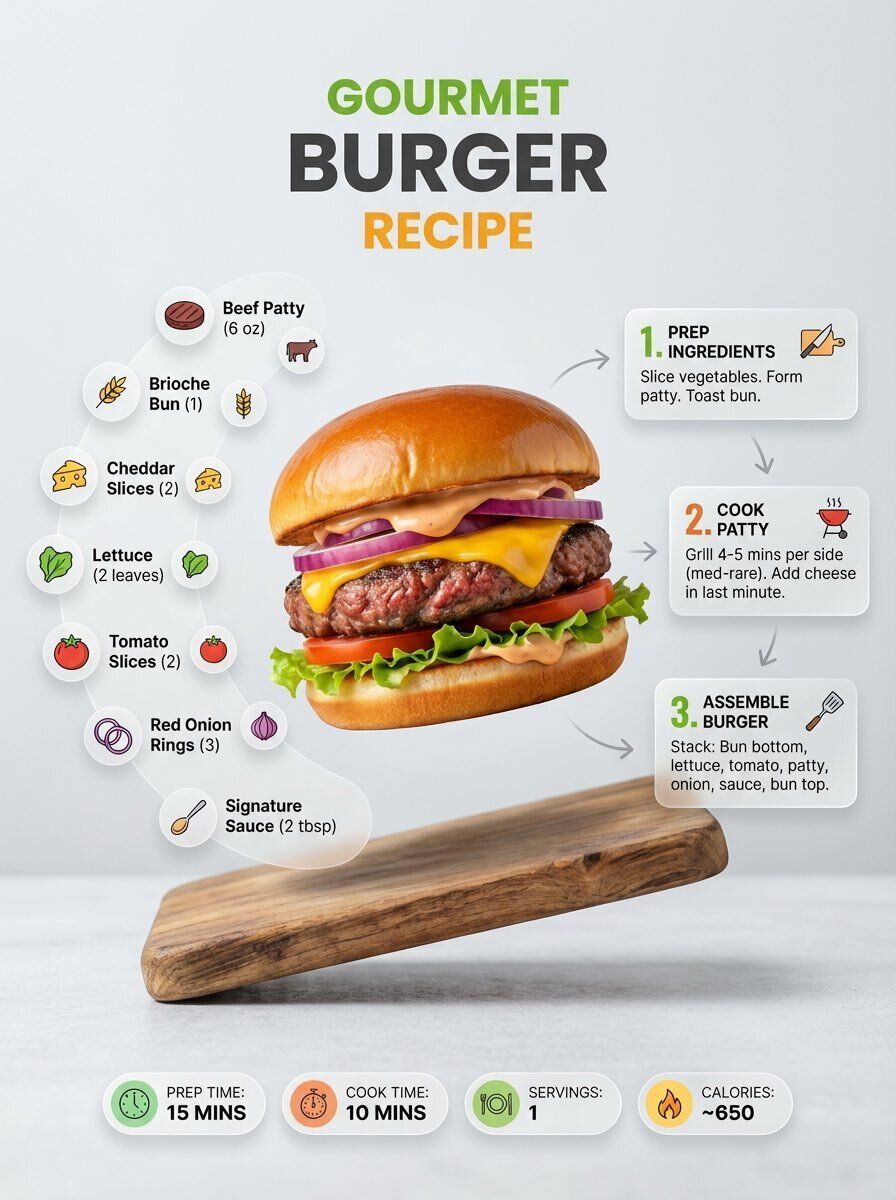
Create Your Own Photo Like This Using the Prompt Below:
Ultra-clean modern recipe infographic. Showcase [FOOD] in a visually appealing finished form—sliced, plated, or portioned—floating slightly in perspective or angled view. Arrange ingredients, steps, and tips around the dish in a dynamic editorial layout, not restricted to top-down. Ingredients Section: Include icons or mini illustrations for each ingredient with quantities. Arrange them in clusters, lists, or circular flows connected visually to the dish. Steps Section: Show preparation steps with numbered panels, arrows, or lines, forming a logical flow around the main dish. Include small cooking icons (knife, pan, oven, timer) where helpful. Additional Info (optional): Total calories, prep/cook time, servings, spice level—displayed as clean bubbles or badges near the dish. Visual Style: Editorial infographic meets lifestyle food photography. Vibrant, natural food colors, subtle drop shadows, clean vector icons, modern typography, soft gradients or glassmorphism for step panels. Accent colors can highlight key info (calories, prep time). Composition Guidelines: Finished meal as hero visual (perspective or angled) Ingredients and steps flow dynamically around the dish Clear visual hierarchy: dish > steps > ingredients > optional stats Enough negative space to keep design airy and readable Lighting & Background: Soft, natural studio lighting, minimal textured or gradient background for premium editorial feel. Output: 1080×1080, ultra-crisp, social-feed optimized, no watermark.Model: Nano Banana Pro
Resource of the Day
Agentic Design Patterns Playbook by Google
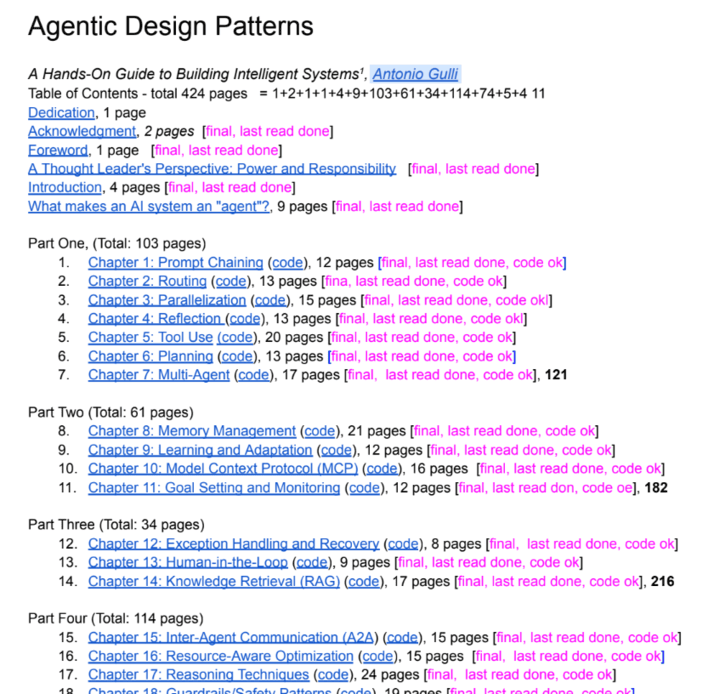
Agentic Design Patterns is a hands-on guide by Antonio Gulli (Senior Director of AI at Google) for anyone building AI agents and agentic systems. It explains what sets agents apart — goal-driven autonomy, tool use, memory, and multi-step state management — and why these add real engineering complexity.
Featured AI Video
The Thinking Game | Full Documentary | Tribeca Film Festival Official Selection
This feature-length documentary follows Google DeepMind and its founder, Demis Hassabis, over several years as the team pushes toward more general AI, capturing the breakthroughs, setbacks, and high-stakes decisions behind systems like AlphaGo, AlphaZero, and major advances in protein folding.
Facebook Ads Mastery Course

Most people don't lose money on Facebook ads because ads "don't work". They lose money because the setup is wrong: wrong objective, wrong audience, no retargeting, weak tracking. So I put the full roadmap into one course: 👇
What you'll learn:
How to set up your Meta ads foundation safely
How to choose objectives that match your goal
How to build audiences that actually convert
How to retarget the right people at the right time
How to read results and scale what's working